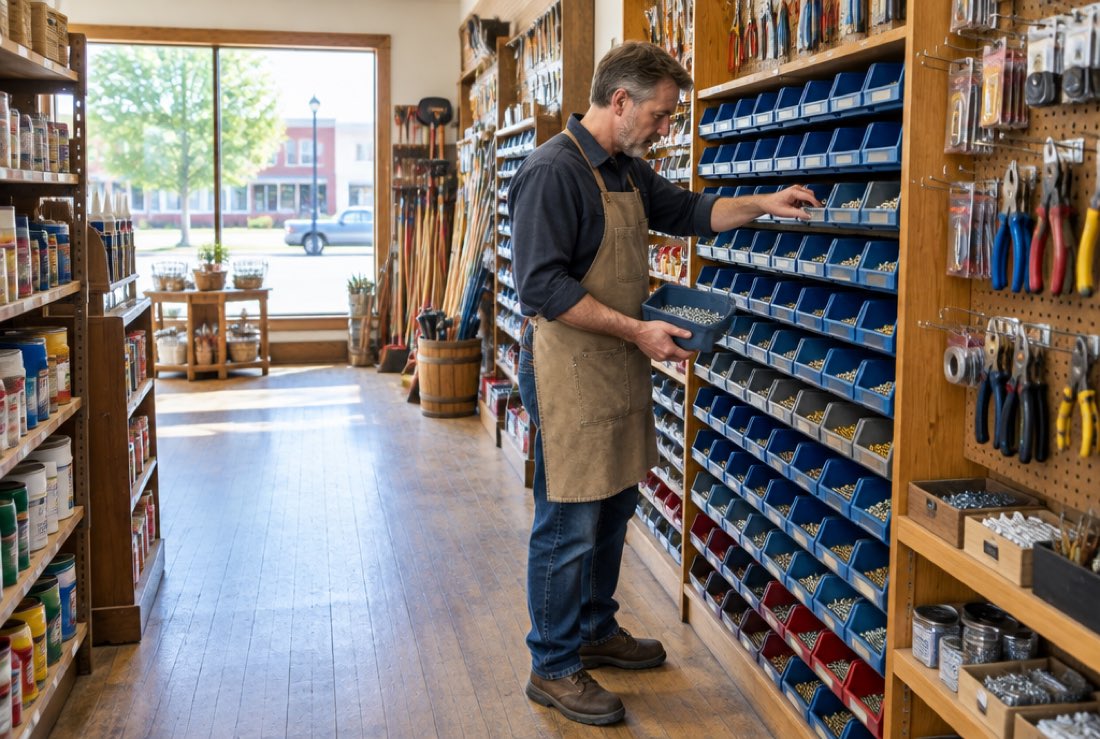
Every hardware store in Maine has the same week. It lands somewhere between the last of October and the middle of November, the temperature drops below freezing overnight, and for four days everybody in town wants the same six things.
Pickett & Haskins had been buying for that week the way most stores do: from memory, in the first week of October, usually about ten days late.
Ordering from last year instead of last week
What Aisle changed was not the size of the order. It was the date. A seasonal minimum on an item is a second number with a window on it — heat tape climbs from 12 to 40 on October 1 and drops back on March 31 — and the reorder fires against the higher number from the day the window opens.
The windows came out of three years of the store's own sales, not a national curve. Morgan adjusted eleven of them the first year and two the second.
The first cold week
In the twelve months before, their seasonal items were ordered an average of eleven days after the sales had already started climbing. Last October the orders went out before the climb, which meant the boxes were in the back room when the week arrived.
- Heat tape, pipe insulation, ice melt and window film were all above minimum going in.
- Nothing went on backorder, for the first time either owner could remember.
- Ninety-seven percent of October's orders were filled off the shelf.
The freeze is the one week a year you cannot be out of anything. We stopped being out of things.
The paint counter got the same treatment, with a smaller curve: primer and exterior paint climb in May and fall away in September, and the minimums move with them without anybody writing it on a calendar.
Minimums follow the season now. We went into the first freeze with heat tape on the shelf instead of on backorder.